The Unseen Potential of Your Supporting Cast
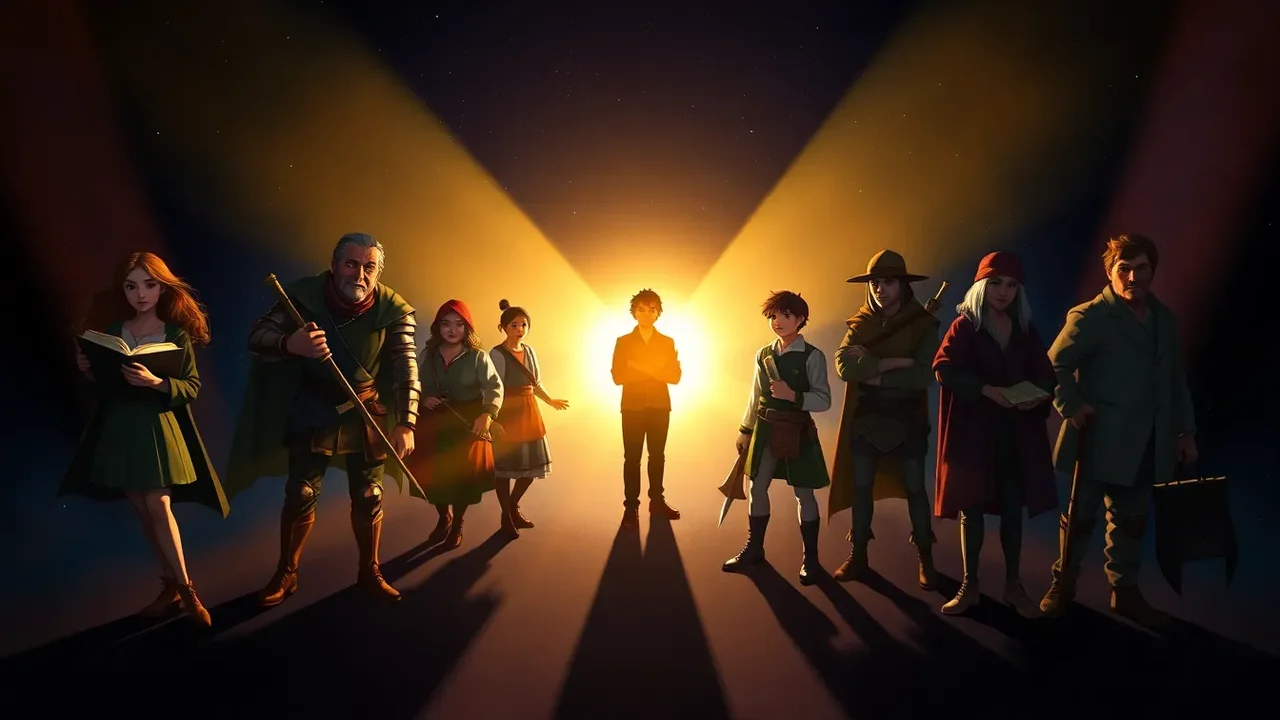
In the vast landscape of storytelling, protagonists often receive the lion's share of attention. Their desires, fears, and transformations are meticulously charted, leaving side characters as mere functional tools—the wise mentor, the comic relief, the loyal friend. However, this approach squanders a profound narrative resource. Side characters, when granted their own arcs, transform from cardboard cutouts into living, breathing individuals who enrich the entire story ecosystem. Their journeys create depth, subvert expectations, and provide emotional resonance that a single protagonist's arc cannot achieve alone.
Why Side Character Arcs Elevate Your Narrative
Consider the principle of narrative density. A story where every character exists solely to serve the main plot is like a painting with only one color. Side character arcs introduce subplots that mirror, contrast, or challenge the protagonist's journey. For instance, in Harry Potter, Neville Longbottom begins as a timid, forgetful boy. His arc—from fear to courage, from obscurity to leading Dumbledore's Army—doesn't detract from Harry's story; it amplifies the theme of bravery arising from unlikely places. Similarly, Samwise Gamgee in The Lord of the Rings has his own internal struggle between loyalty to Frodo and his own desires for home and peace. His arc culminates in carrying Frodo up Mount Doom, a moment that redefines heroism as steadfast love rather than grand adventure.
Without these arcs, side characters become stereotypes. The wise mentor archetype, like Obi-Wan Kenobi, gains depth when we see his failures (his role in Anakin's fall) and his redemption (training Luke). A side character arc doesn't require a full novel; it can be a subtle transformation shown through choices and consequences. Practical benefits include increased reader investment—audiences bond with characters who grow, even if they're not the main focus. Furthermore, side arcs allow you to explore themes that the protagonist's journey might not accommodate. If your hero is on a quest for vengeance, a side character could explore forgiveness, providing thematic counterpoint.
| Benefit | Example | Impact on Story |
|---|---|---|
| Adds thematic depth | In Breaking Bad, Jesse Pinkman's arc contrasts Walt's moral decay | Highlights the human cost of Walt's choices |
| Creates emotional stakes | In Stranger Things, Steve Harrington's arc from bully to babysitter | Makes his survival matter beyond the main plot |
| Subverts expectations | In Game of Thrones, Theon Greyjoy's redemption arc | Proves that even betrayers can seek atonement |
| Provides worldbuilding | In One Piece, each crew member's backstory enriches the world | Makes the world feel lived-in and historical |
Crafting Meaningful Side Character Arcs: A Practical Guide
Designing these arcs requires deliberate planning. First, identify the core wound or desire of your side character. What do they want that they cannot have? What fear drives them? For example, a loyal guard might secretly dream of being a painter, but duty binds him. His arc could involve choosing between safety and passion. Second, ensure their arc intersects with the main plot at key moments. The guard's decision to paint a forbidden mural could provide a clue to the mystery or inspire the protagonist.
Common Pitfalls to Avoid
- Overwriting the protagonist: Side arcs should complement, not overshadow. If your side character's story becomes more compelling than the main plot, you may need to adjust focus or promote them.
- Forced relevance: Every side character doesn't need a grand arc. Minor characters like a bartender or messenger can remain static. Choose characters who occupy screen time regularly.
- Unearned transformations: A side character's change must be motivated by events in the story. A cowardly soldier becoming brave overnight without a catalyst feels cheap. Show the incremental steps—a small act of courage, then a larger one.
- Lack of consequences: Their arc should have ripple effects. If a side character betrays the group, the protagonist must react. This creates organic drama.
Consider using a simple structure: introduction (establish their flaw or desire), complication (an event forces them to confront it), climax (a choice that defines them), and resolution (new status quo). For instance, in Frozen, Kristoff begins as a cynical ice harvester who only cares about his reindeer. His arc introduces him to Anna, forcing him to care about someone else. The climax is him choosing to return to Anna even when it seems hopeless. The resolution is him becoming part of the family.
The Ripple Effect: How Side Arcs Strengthen the Main Plot
Side character arcs are not decorative; they are structural. They can foreshadow the protagonist's fate, provide contrast, or offer alternative perspectives. In Star Wars: A New Hope, the arc of Han Solo—from selfish smuggler to selfless hero—mirrors Luke's journey but with a cynical starting point. Han's transformation makes Luke's idealism seem more plausible by showing that even a scoundrel can change. Similarly, Severus Snape's arc in Harry Potter recontextualizes the entire series. His love for Lily, his double-agent role, and his redemption are revealed gradually, enriching every reread.
From a practical standpoint, side arcs also help with pacing. When the main plot needs a breather, a subplot focused on a side character can maintain tension while exploring different tones. For example, in a grim war story, a side character's lighthearted romance can provide relief—but if that romance ends tragically, it deepens the sense of loss. Balance is key. Use side arcs to vary emotional texture.
Examples of Effective Side Character Arcs
- Zuko (Avatar: The Last Airbender): One of the most celebrated arcs in animation. Zuko's journey from honor-obsessed exile to realizing true honor lies in helping others. His arc runs parallel to Aang's, eventually merging.
- Jaime Lannister (Game of Thrones): Begins as a sister-loving, child-pushing villain. His arc—losing his hand, being humbled, and finding purpose in Brienne—makes him one of the most complex characters.
- Molly Weasley (Harry Potter): Her arc is subtle but powerful—from a motherly figure to a warrior who defeats Bellatrix Lestrange. It shows that domesticity does not preclude strength.
- Gollum (The Lord of the Rings): His tragic arc—from hobbit-like Sméagol to corrupted creature—serves as a warning about the Ring's power. His internal conflict mirrors Frodo's struggle.
Practical Techniques for Writing Side Character Arcs
Start with a character bible that includes not just physical descriptions but also their goals, fears, and secrets. Then, map their arc across the story's timeline. Use a simple table:
| Story Act | Side Character's State | Key Event | Change |
|---|---|---|---|
| Act 1 | Loyal but fearful servant | Protagonist asks for help | Begins to question loyalty |
| Act 2 | Secretly helps enemy | Caught by protagonist | Confronts fear of punishment |
| Act 3 | Chooses to confess | Protagonist forgives | Becomes truly loyal, now courageous |
Another technique: the mirror test. Ask yourself: if this side character were removed, would the story still work? If yes, they likely need an arc. Their arc doesn't have to be long; even three scenes can show growth. For instance, in Jurassic Park, the lawyer Gennaro begins as a greedy corporate man. His arc is short: he hides during the T-Rex attack, then is eaten while trying to escape. The arc shows cowardice and greed leading to demise, reinforcing the theme of nature's supremacy.
The Emotional Payoff: Why Readers Remember Side Characters
Ultimately, side character arcs create emotional investment. Readers remember Hagrid not just because he's funny, but because his arc includes being expelled from Hogwarts, losing his dragon, and finding acceptance. They remember Boba Fett not just for his armor, but because The Book of Boba Fett gave him an arc of redemption and leadership. These arcs make the world feel alive. They suggest that every person has a story worth telling, which is a deeply human truth.
When you craft side character arcs, you also future-proof your story. If you ever write sequels or spin-offs, these characters already have foundations. Imagine a novel where the protagonist's best friend has a hidden past as a spy. That friend's arc could become the center of a sequel. Even if not, their depth enriches the current narrative. In serialized storytelling, side arcs provide continuity. The audience grows attached to the ensemble, not just the lead.
Finally, consider the economy of storytelling. A side character arc can convey themes more efficiently than long exposition. For example, a character who learns to trust after being betrayed can illustrate the theme of forgiveness without the protagonist having to lecture. Show, don't tell, applies to themes too. Let the side character's journey demonstrate the moral of the story.
In conclusion, side characters are not accessories; they are co-authors of your story's meaning. By giving them arcs, you acknowledge that every life has value, every perspective matters, and every journey—no matter how small—can inspire. Your story will be richer, your themes deeper, and your readers more loyal. So next time you outline a chapter, ask yourself: what does the innkeeper want? What is the guard afraid of? The answers might transform your narrative from good to unforgettable.
FAQ - Why Your Side Characters Deserve Their Own Arcs
What is a side character arc?
A side character arc is a narrative journey where a supporting character undergoes a meaningful change—emotional, moral, or psychological—over the course of a story. This transformation can be subtle or dramatic, but it gives the character depth and purpose beyond serving the protagonist.
Do all side characters need an arc?
No. Only side characters who appear frequently or have significant interactions with the main plot should have arcs. Minor characters like shopkeepers or messengers can remain static. Focus on characters who impact the story's emotional core or thematic message.
How do side character arcs benefit the main plot?
They add thematic depth, create emotional stakes, subvert expectations, and provide pacing relief. A well-crafted side arc can mirror or contrast the protagonist's journey, making the story more layered and resonant. For example, a side character's failure can highlight the protagonist's success.
What are common mistakes when writing side character arcs?
Common pitfalls include making the arc overshadow the protagonist's story, forcing relevance where none exists, showing unearned transformations without proper motivation, and ignoring the consequences of the arc on the main plot. Always ensure the arc serves the overall narrative.
Can a side character arc be short?
Yes. A side character arc can be as brief as three scenes—introduction, complication, and resolution—as long as the change is motivated and visible. For instance, a cowardly guard who stands up once in a critical moment can have a complete mini-arc.
How do I start planning a side character arc?
Begin by identifying the character's core desire or fear. Then map their journey across the story's acts, ensuring key events push them toward change. Use tools like a character bible or a simple table to track their evolution. Ask: how does this character grow, and how does that growth affect the protagonist?
Side character arcs transform supporting roles into memorable, multi-dimensional individuals who enrich the main plot with thematic depth, emotional stakes, and subplots. By crafting their own journeys—whether brief or extensive—writers create more immersive worlds and stronger reader investment, proving that every character deserves a story worth telling.
Side characters are not mere scaffolding for your protagonist—they are the hidden pillars that can elevate your entire narrative. When you invest in their arcs, you honor the complexity of human experience, creating a story that feels alive, layered, and deeply resonant. Every character, no matter how small, deserves a chance to grow, to fail, to triumph. By giving them that chance, you don't just write a better story; you write a truer one. So embrace the shadows, listen to the whispers of your supporting cast, and watch your world expand into something unforgettable.