The Catalyst of Unpredictability
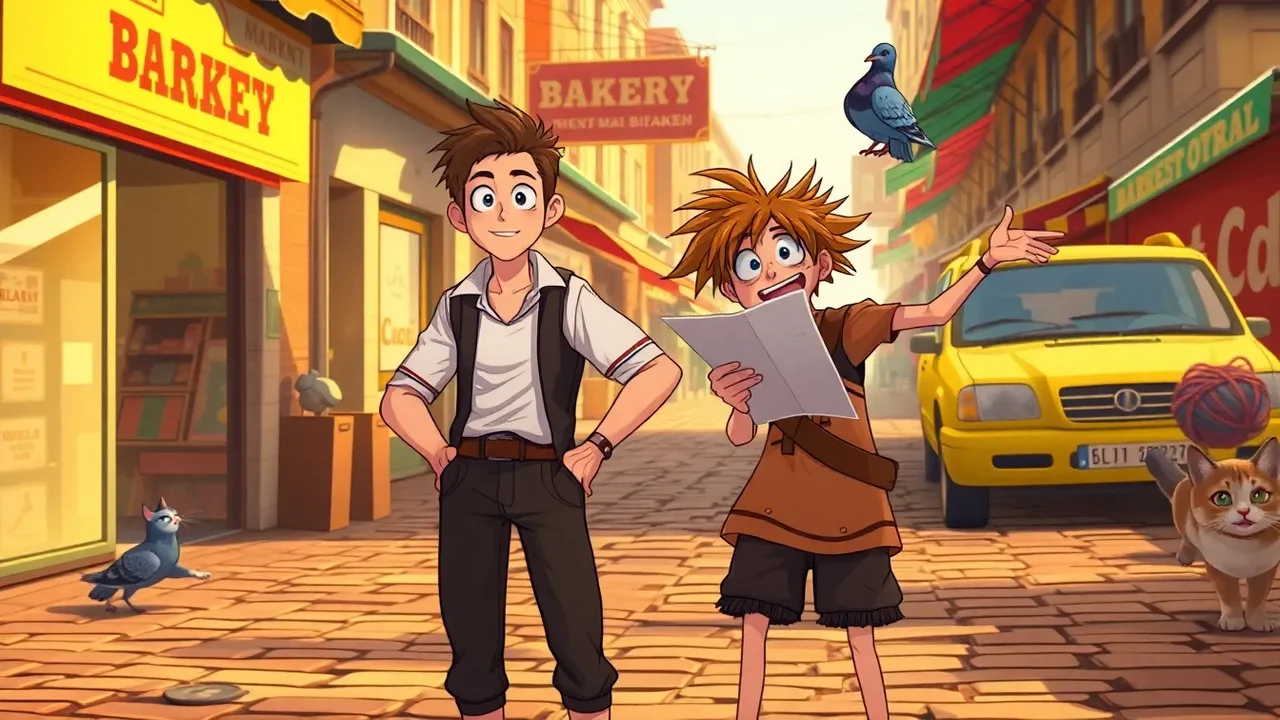
A protagonist, by narrative nature, often clings to order, morality, or a clear goal. This structured existence, while relatable, can become a narrative cage. The chaotic best friend serves as the key. They are the unpredictable variable, the spark that forces the protagonist out of their comfort zone. This character doesn't just provide comic relief; they are a narrative engine that drives the story forward through sheer, glorious disruption. Their chaotic nature is not mere disorganization—it is a refusal to accept the status quo. They see the rules as suggestions, and the protagonist's careful plans as a challenge.
Emotional Permission to Break the Rules
Every protagonist has an inner conflict between what they should do and what they want to do. The chaotic best friend gives them permission to choose the latter. When the protagonist hesitates, the best friend already has one foot out the door, ready to jump. This dynamic is crucial for character growth. The protagonist learns to prioritize their own desires over external expectations, often with messy, memorable consequences.
Key Emotional Functions of the Chaotic Best Friend:- Moral Gray Area: They justify the unjustifiable, forcing the protagonist to confront their own ethical boundaries.
- Risk-Taking Embodiment: They take risks the protagonist never would, creating openings for new plotlines.
- Emotional Sounding Board: Their blunt, unvarnished honesty cuts through the protagonist's self-deception.
- Failure Normalization: They fail spectacularly and shamelessly, teaching the protagonist that mistakes are part of the journey.
Conflict Generation Through Natural Chaos
Conflict is the heartbeat of any story. A chaotic best friend generates conflict without needing a villain. Their impulsive decisions—sending a risky text, starting a bar fight, or spending rent money on a cryptic map—create immediate, organic tension. This is more powerful than contrived plot devices because it springs from character. The protagonist must then react, adapt, and often clean up the mess, revealing their own resourcefulness or stubbornness.
| Chaotic Action | Protagonist's Dilemma | Narrative Outcome |
|---|---|---|
| Publicly insulting a powerful figure | Loyalty vs. self-preservation | Forced alliance or exile |
| Inviting a dangerous stranger along | Trust vs. caution | Discovery of new information or betrayal |
| Destroying a crucial object | Grief vs. acceptance | New path of creation or recovery |
| Confessing a secret too early | Control vs. vulnerability | Accelerated intimacy or conflict |
How Chaos Reveals Character Depth
The true value of the chaotic best friend lies in what they reveal about the protagonist. Under pressure, a protagonist's true nature emerges. Does the protagonist scold them? Enable them? Sacrifice their own goals for them? Each response tells the audience who they are. For example, a disciplined soldier-protagonist might initially resent a chaotic civilian friend, but when the friend's reckless plan saves the day, the soldier learns to value adaptability over rigidity. This arc would be impossible without the chaotic friend's presence.
Breaking Logical Loops and Stuck Plots
Every writer hits a point where the plot stalls. The protagonist has no clear next move. This is when the chaotic best friend thrives. They will do something illogical that creates a new thread. They will misinterpret an instruction, break a taboo, or follow a hunch that seems absurd. By doing so, they open a door the protagonist could not see. This is not deus ex machina; it is character-driven chance. The friend's chaos is a tool for the writer to escape corners they have painted themselves into.
Practical Applications for Conflict Resolution
The Mirror for the Protagonist's Shadow Self
Psychologically, the chaotic best friend embodies the protagonist's repressed desires. The protagonist who is too serious needs to laugh. The protagonist who is too controlled needs to let go. The chaotic friend lives the life the protagonist fears to embrace. This creates a powerful tension: admiration mixed with judgment. The protagonist must either accept this part of themselves or reject it completely, leading to a turning point. For instance, in many buddy stories, the protagonist eventually adopts a small piece of their friend's chaos, achieving balance.
Examples of Dynamic Pairs
Consider the classic duo: the rigid detective and the whimsical sidekick. Without the sidekick's unpredictable insights, the detective would only see facts, not the truth. Or the uptight hero and the rogue: the rogue's scorn for authority allows the hero to break a corrupt law. These patterns work across genres because they tap into a universal human need for balance.
Generating Subplots Without Effort
Chaotic characters are subplot factories. Their personal life is a minefield of ex-lovers, debts, and secret identities. Every offhand comment can bloom into a whole side story. The protagonist's main plot might be saving the kingdom, but the chaotic friend's subplot could be winning back their estranged family. This richness elevates the entire narrative. The world feels fuller because the friend has their own agenda, even if that agenda is as simple as 'find the best party in the city'.
- Romantic Subplots: The friend's disastrous love life provides comic relief and lessons for the protagonist.
- Mystery Subplots: The friend's past catches up with them, dragging the protagonist into a hidden world.
- Growth Subplots: The friend learns to be responsible, thanks to the protagonist's stabilizing influence (reversal of roles).
Balancing Chaos with Narrative Cohesion
It is critical to balance chaos. Too much, and the plot becomes a farce. Too little, and the friend is just a grumpy advisor. The writer must show consequences: the friend's actions have real costs that affect both characters. This creates stakes. The protagonist might love their friend but resent the destruction. This tension is a rich vein for drama. The best chaotic friends are not stupid—they are reckless but insightful. They see patterns the logical protagonist misses because they are not constrained by fear.
The Humor That Cuts Through Seriousness
Serious stories need relief. The chaotic best friend provides it naturally. Their ill-timed jokes, awkward silences, or hilarious failures break tension at exactly the right moment. This is not about slapstick (though it can be); it is about perspective. When the protagonist is about to despair, the friend says something absurd that reminds them life is not a tragedy. That moment of levity can save a story from becoming overwrought. Readers need to breathe, and the chaotic friend is the breath.
Practical Dialogue Tips
Evolution of the Relationship
The relationship should not remain static. Over the course of a story, the chaotic friend might temper, or the protagonist might embrace some chaos. The best arcs show mutual influence. The protagonist learns flexibility; the friend learns focus. This transformation feels earned because it was tested by the fires of conflict. By the end, the protagonist cannot imagine their journey without the friend's chaos, because it was that chaos that made the story memorable.
Avoiding Tropes Without Substance
Watch for the 'manic pixie dream friend' trap. The chaotic character must have their own needs, limitations, and growth. They are not just a tool for the protagonist. Write them as a full person who happens to be messy. Show their vulnerabilities: why are they chaotic? Often, it is a coping mechanism for pain. This depth will make the protagonist's care for them genuine. The narrative payoff is much richer when the friend is a three-dimensional character whose chaos has roots.
Structural Role in the Three-Act Structure
In Act One, the chaotic friend disrupts the protagonist's ordinary world, making it clear that the status quo is ending. In Act Two, the friend's chaos creates obstacles but also provides solutions that the protagonist missed. In Act Three, the friend might make a sacrifice—voluntary or not—that requires the protagonist to act without their crutch. This separation is often the catalyst for the protagonist's final growth. The friend's chaos is then recontextualized as a gift, not a curse.
Remember: The chaotic best friend is not a plot device; they are a relationship. Build that relationship with care, and your story will be richer, funnier, and more human. The chaos is not the point—the love, conflict, and growth that come from it are. Without that chaos, the protagonist would be alone in a perfectly ordered, perfectly boring world.
FAQ - Why Your Protagonist Needs a Chaotic Best Friend
What specific narrative problems does a chaotic best friend solve for a writer?
It solves plot stagnation, lack of organic conflict, and protagonist passivity. The friend's impulsive actions create natural turning points, force the protagonist to make choices, and generate subplots without contrived writing.
Can a chaotic best friend work in a serious or dark story?
Absolutely. In dark narratives, the chaotic friend provides essential comic relief and emotional contrast, preventing the tone from becoming unbearable. Their chaos can also serve as a tragic counterpoint—their recklessness may lead to dire consequences, heightening the story's stakes.
How do I prevent the chaotic friend from becoming annoying to readers?
Give the friend moments of vulnerability and genuine insight. Show that their chaos has emotional depth—perhaps a traumatic past or a hidden fear. Balance their impulsiveness with loyalty and moments of surprising wisdom. Also, ensure the protagonist responds with both frustration and affection.
Should the chaotic best friend ever become more structured over the story?
Yes, but gradually. A full transformation would weaken their role. Instead, show them learning to channel their chaos constructively, while still retaining their core spontaneity. The protagonist's influence may temper them, but they should never lose their essential spark.
How does the chaotic friend differ from a sidekick?
A sidekick often supports the protagonist's goals passively. A chaotic friend actively pursues their own agenda, which may conflict with the protagonist's plans. They are not a helper; they are a co-lead with their own arc, creating friction and depth.
Can the protagonist be the chaotic one instead?
Yes, but then the friend would typically be the stabilizer. The dynamic works both ways: the chaotic character disrupts the orderly one. If the protagonist is already chaotic, the friend might represent order or another type of chaos that leads to different conflicts.
A chaotic best friend is a crucial narrative device that generates conflict, growth, and humor by disrupting the protagonist's ordered world. This relationship forces emotional vulnerability, creates organic subplots, and provides a mirror for the protagonist's repressed desires. Balanced correctly, it transforms a predictable story into a dynamic, unforgettable journey.
In the end, a protagonist without a chaotic best friend is a ship without wind—they can move, but slowly and predictably. The chaotic friend is the gale that flips the ship upside down, forcing the protagonist to navigate storms they never planned for. This relationship is not just a narrative convenience; it is a mirror for the messiness of real human connection. Readers love these duos because they reflect the truth that we grow most not in comfort, but in the beautiful, unpredictable chaos of someone who refuses to let us stay still. So, embrace the madness—your protagonist needs it to become the hero they are meant to be.