Plot Divergences: From Page to Screen
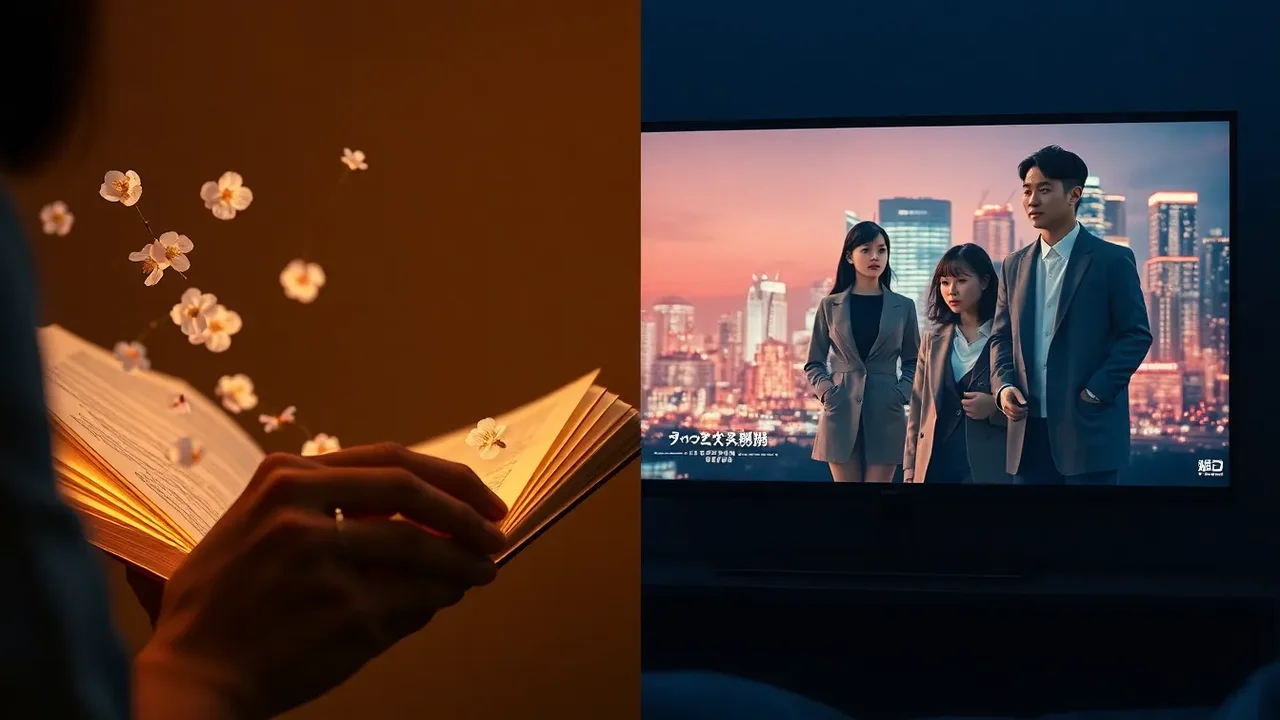
The transition from novel to dorama often necessitates significant plot adjustments. In the case of Whispers of the Wind, the original novel unfolds over 400 pages, while the dorama spans 11 episodes. The book’s intricate subplot involving the protagonist’s estranged uncle is entirely omitted in the series to streamline the narrative. Instead, the dorama introduces a new character—a childhood friend—to serve as a romantic rival, a change that heightens dramatic tension but dilutes the novel’s focus on familial reconciliation. For example, the novel’s climactic scene at the family shrine becomes a rooftop confession in the series, shifting the emotional core from heritage to personal choice. These alterations reflect the dorama’s need for episodic cliffhangers and visual appeal.
Character Development: Depth vs. Screen Time
Characters in the book enjoy extensive internal monologues and backstory, whereas the dorama relies on dialogue and expression. The protagonist, Kaito, in the novel undergoes a gradual transformation from a cynical journalist to a hopeful dreamer, a process described over several chapters. In the series, this arc is compressed into key moments: a tearful breakdown in episode 4 and a triumphant speech in episode 10. The supporting cast also suffers. The novel’s wise grandmother, who dispenses advice through letters, is reduced to a few brief phone calls in the dorama. Conversely, the series expands the role of the antagonist, giving him a sympathetic backstory that the book lacks. This trade-off is common in adaptations: screenwriters must choose which characters to prioritize for emotional impact.
Pacing and Structure: The Rhythm of Storytelling
The novel’s pacing is leisurely, with long descriptive passages and slow-burn romance. The dorama, however, adheres to the standard Japanese drama format: a cold open, three acts per episode, and a mid-episode commercial break. This forces the story into tighter beats. For instance, the book’s first 100 pages establish the setting and mood through sensory details—the smell of rain, the texture of old parchment. The dorama accomplishes this in the first 10 minutes with a montage of sweeping landscapes and a voiceover. The result is a faster pace that sacrifices nuance for accessibility. A table comparing key structural elements illustrates these differences:
| Aspect | Novel | Dorama |
|---|---|---|
| Total runtime | ~10 hours reading | 11 x 45 min = 8.25 hours |
| Number of scenes | ~120 | ~55 |
| Flashback usage | Frequent, lengthy | Brief, strategic |
| Cliffhangers | Minimal | Every episode end |
Visual Storytelling: What the Camera Adds and Removes
The dorama leverages visual language to convey emotions that the novel describes in words. In the book, Kaito’s grief is expressed through a paragraph about his sleepless nights and empty coffee cups. The series shows him staring at a half-empty cup, the camera lingering on the steam rising—a poignant image that resonates instantly. However, visual storytelling also imposes limitations. The novel’s abstract metaphors, such as “the wind carried his regrets like fallen leaves,” cannot be directly translated. The dorama substitutes a literal scene of leaves blowing across a grave, which loses the metaphorical depth. Additionally, the series uses color grading to indicate mood: warm tones for flashbacks, cool blues for present conflict. This is effective but reduces the reader’s imaginative freedom. A list of key visual changes includes:
- Setting: The novel’s rural village is replaced by a small town with recognizable landmarks for easier production.
- Costumes: Characters wear modern clothing rather than the period attire described in the book, to appeal to contemporary audiences.
- Music: A recurring piano theme underscores romantic moments, whereas the novel relies on silence and internal reflection.
Cultural and Contextual Adaptations
Dorama adaptations often update cultural references to resonate with modern viewers. The novel, written in 2005, includes references to flip phones and internet cafes. The series, aired in 2023, replaces these with smartphones and social media. More significantly, the book’s treatment of gender roles—where the female lead is a quiet librarian—is revised in the dorama to portray her as an assertive career woman. This change reflects shifting societal norms in Japan. The novel’s subplot about arranged marriage is downplayed; instead, the series emphasizes the characters’ career aspirations. Such modifications ensure the story feels relevant, but purists may argue they alter the author’s original intent. The dorama also adds a comedic side character (a quirky neighbor) that provides levity, a staple of the genre absent from the novel.
Examples of Adaptation Choices
One notable example is the treatment of the protagonist’s dream. In the novel, Kaito dreams of becoming a novelist, but his journey is internal and solitary. The dorama externalizes this by showing him attending a writing workshop and receiving feedback from a mentor. This adds a visual dimension but also introduces a subplot about competition that the novel lacks. Another example: the book’s critical plot point—a lost letter that reveals a family secret—is delivered through a slow discovery process. In the series, the letter is found in a dramatic scene involving a locked drawer and a suspenseful music cue. The emotional payoff is more immediate, but the mystery’s subtlety is lost. These choices highlight the fundamental difference between mediums: novels invite contemplation, while doramas demand engagement.
Practical Insights for Viewers and Readers
For those experiencing both versions, it is helpful to approach them as separate works. Watching the dorama first can spoil the novel’s twists, but reading the novel first may lead to disappointment with the series’ omissions. A balanced strategy is to read the book, then watch the dorama with an open mind, appreciating the adaptation as an interpretation rather than a reproduction. Many fans create comparison charts, noting which scenes are faithful and which are altered. Online forums often debate the merits of each version; for Whispers of the Wind, the majority opinion leans toward the novel for depth and the dorama for emotional immediacy. Ultimately, the choice depends on personal preference: if you value introspective storytelling, choose the book; if you prefer visual spectacle and tighter pacing, the series will satisfy.
Technical Production Differences
The dorama benefits from professional cinematography, sound design, and acting. The novel relies solely on the author’s prose. In the series, the lead actor’s performance—particularly his restrained expressions—adds layers that the book cannot convey. Conversely, the novel allows readers to imagine voices and faces, which can be more personal. Production constraints also affect content: the dorama’s budget limited location shoots to three main sets, whereas the novel describes dozens of locales. This compression sometimes feels artificial, as characters inexplicably meet in the same café. Despite these limitations, the dorama’s use of music and lighting creates an atmosphere that many viewers find immersive. A practical tip: watch the series with subtitles to catch nuances lost in translation.
Reception and Legacy
Both the novel and the dorama achieved commercial success, but critical reception differed. The novel was praised for its lyrical prose and complex themes, while the dorama was lauded for its accessible storytelling and strong performances. Reviewers noted that the series simplified the moral ambiguity of the novel, making characters more clearly good or evil. This binary approach suits television audiences but diminishes the novel’s philosophical depth. The dorama also sparked interest in the original book, leading to a spike in sales—a common phenomenon known as the “adaptation effect.” For aspiring writers and producers, studying the differences between the two versions offers valuable lessons in narrative adaptation: what to keep, what to cut, and what to invent.
FAQ - Comparing the Book and Series: A Dorama Novel Review
What are the main differences between the novel 'Whispers of the Wind' and its dorama adaptation?
The novel features deeper character introspection and a slower pace, while the dorama streamlines the plot, adds new characters, and uses visual storytelling to heighten emotional moments. Key changes include the omission of a subplot about an estranged uncle and the addition of a romantic rival.
Should I read the book before watching the dorama?
It depends on your preference. Reading first gives you the full depth of the story, but may lead to disappointment with the series' omissions. Watching first provides a quicker, more visual experience, but spoils the novel's twists. Many fans recommend experiencing both as separate works.
How does the dorama handle character development compared to the book?
The book uses extensive internal monologues and backstory, while the dorama relies on dialogue, facial expressions, and key dramatic scenes. Supporting characters are often reduced or expanded to fit screen time constraints, altering the emotional balance.
Are there any cultural updates in the dorama that differ from the novel?
Yes, the dorama modernizes technology (smartphones instead of flip phones) and updates gender roles (female lead becomes a career woman). The subplot about arranged marriage is downplayed to resonate with contemporary Japanese audiences.
Why do adaptations often change the ending or key scenes?
Adaptations aim to create episodic cliffhangers and visual impact. The novel's subtle ending may be replaced with a more dramatic scene to satisfy television viewers. Production constraints, such as budget and location, also force changes.
Which version is more faithful to the original author's intent?
The novel is more faithful as it was written by the author. The dorama is an interpretation by a team of writers and directors, who prioritize entertainment and visual appeal over strict adherence to the source material.
Comparing the book and dorama adaptation of 'Whispers of the Wind' reveals key differences in plot, character depth, pacing, and visual storytelling. The novel offers introspective prose and slow-burn romance, while the series uses cliffhangers, music, and modern updates for broader appeal. Both versions succeed on their own terms, providing distinct experiences for readers and viewers.
In the end, comparing the book and the dorama adaptation of Whispers of the Wind reveals a fascinating interplay between two distinct storytelling mediums. The novel offers a rich, introspective journey that rewards patient readers, while the series delivers a streamlined, emotionally charged experience designed for broad appeal. Neither version is superior; each excels in its own domain. For fans, the joy lies in exploring both, appreciating how the same story can be told in radically different ways. Whether you turn pages or press play, the heart of the narrative—the search for connection and meaning—remains intact.