Defining the Narrative Paradox
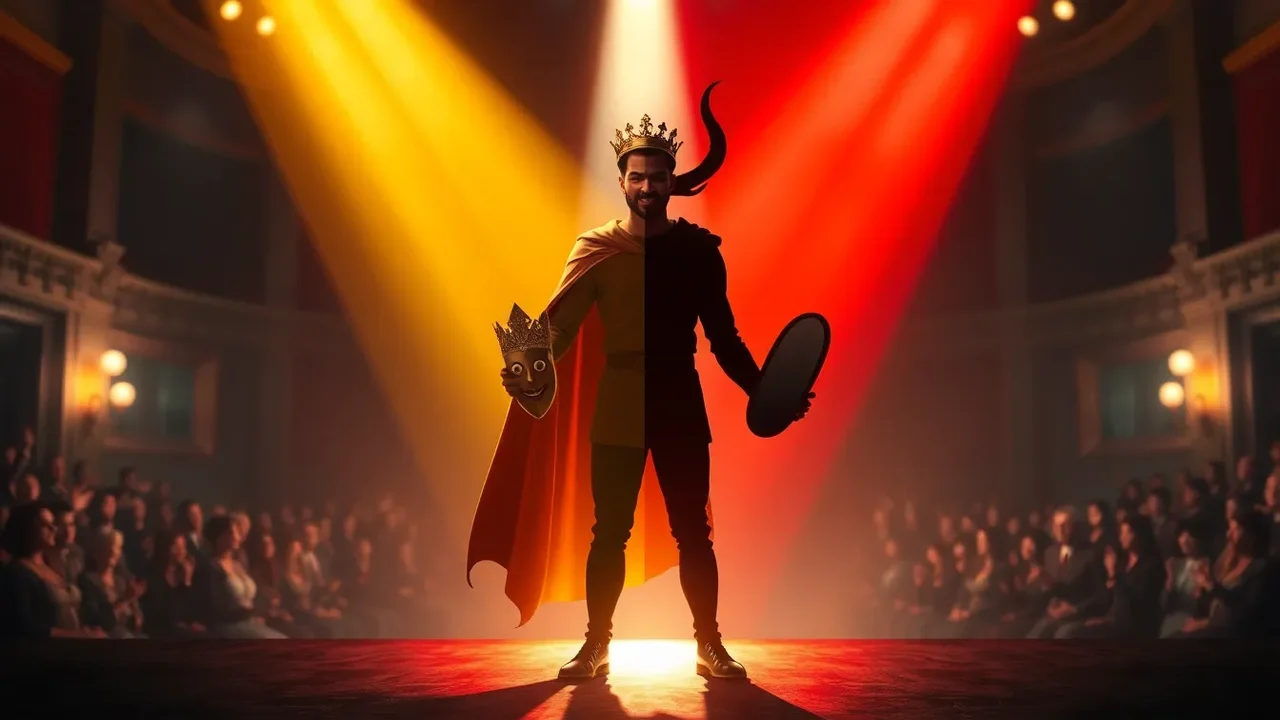
The question 'Is the Main Character Actually the Antagonist?' challenges traditional storytelling norms by exploring protagonists who embody oppositional force. In classic narratives, the protagonist drives the plot through heroic actions, while the antagonist creates obstacles. However, modern and postmodern works often blur this line, presenting main characters whose goals, methods, or moral compasses align more closely with antagonistic archetypes. This trope, sometimes called the 'villain protagonist' or 'anti-hero as adversary,' forces readers to reconsider empathy, morality, and perspective. The main character's actions may harm others, and their motivations—however justified in their own eyes—cause suffering or chaos. Recognizing this subversion requires analyzing character intent, impact on the story world, and narrative framing. A key part of the analysis is distinguishing between a flawed hero and a true antagonist. While a typical anti-hero may have questionable methods but ultimately pursues good outcomes, an antagonist protagonist actively works against the well-being of others, often as the primary source of conflict.
Key Characteristics of an Antagonist Protagonist
Several traits commonly appear when the main character functions as an antagonist. First and foremost is the lack of moral development. Unlike traditional heroes who grow ethically throughout the story, these characters often remain static or regress into darker behaviors. Second, their goals directly oppose societal or communal good—they seek personal power, revenge, or destruction without redeeming altruistic motives. Third, the narrative perspective may be unreliable; the reader is given only the character's skewed interpretation of events, making it difficult to assess true right and wrong. Fourth, these characters often manipulate others as tools rather than treating them as equals. Fifth, the resolution frequently does not bring justice or catharsis—the antagonist protagonist may succeed, die unrepentant, or leave the story in a state of moral ambiguity. Finally, the emotional response from the audience is complex; we may be fascinated, horrified, or even complicit in their actions due to narrative framing.
Common Narrative Techniques
Writers employ specific techniques to make readers accept an antagonist as the main character. One technique is the unreliable first-person narrator. In novels like 'American Psycho' by Bret Easton Ellis, Patrick Bateman's perspective normalizes extreme violence while the reader gradually realizes the horror. Another technique is sympathetic backstory—providing tragic origins that make the character's actions seem understandable, even if not excusable. For example, Walter White in 'Breaking Bad' begins as a sympathetic cancer patient before descending into a drug lord. A third technique is limited perspective where the audience only sees the world through the protagonist's eyes, making other characters seem like obstacles. This is used in 'Death Note' where Light Yagami believes he is a god delivering justice, but the story reveals his megalomania. A fourth technique is moral equivalence—presenting the antagonist protagonists as no worse than the society around them, such as in 'The Godfather' where Michael Corleone's crimes are set against a corrupt system.
Examples Across Media
Literature offers many clear examples. In Vladimir Nabokov's 'Lolita', Humbert Humbert narrates his obsession with a young girl, using beautiful prose to disguise predation. The reader must actively resist his perspective to recognize him as the antagonist. In William Golding's 'Lord of the Flies', Jack starts as a seemingly normal boy but becomes the primary antagonist of Ralph, even though the novel centers on both characters' experiences. In film, 'The Dark Knight' presents the Joker as a powerful antagonist, yet he is not the main character; but in 'Joker' (2019), Arthur Fleck is the protagonist whose actions directly harm society, making him an unambiguous antagonist. Television series like 'You' follow Joe Goldberg, a serial killer who frames his stalking as love, forcing viewers to remain aware of his true nature. Video games also explore this: in 'Spec Ops: The Line', the player controls Captain Walker who commits war crimes, with the game explicitly critiquing the player's choices.
Why Authors Choose This Device
Using an antagonist as the main character allows authors to explore dark themes without advocating for them. It challenges readers to question their own moral assumptions and the nature of storytelling itself. This device can critique societal norms by showing what happens when one person's ambition goes unchecked. It also creates lasting psychological impact—stories with antagonist protagonists tend to be remembered and debated because they resist easy categorization. Additionally, it provides a platform for complex character studies, examining the psychology of evil from the inside. For writers, it is a risky but rewarding technique that can produce powerful, thought-provoking narratives.
Reader and Viewer Experience
Experiencing a story where the main character is the antagonist requires active reading or viewing. Audiences must hold two conflicting ideas simultaneously: empathy for the character and recognition of their harmful actions. This cognitive dissonance can be uncomfortable but also deeply engaging. Some readers may find themselves rooting for the antagonist protagonist, which raises ethical questions about media consumption. Teachers and critics often use such works to discuss narrative reliability and the dangers of charismatic evil. A common pitfall is that less critical audiences may fully embrace the protagonist's worldview, as happened with fans of 'The Joker' or 'Walter White' who misinterpreted the stories as endorsements. Therefore, authors often use framing devices—like the clear consequences of actions or contrasting viewpoints—to guide interpretation.
Practical Information for Readers and Writers
| Traditional Hero Protagonist | Antagonist Protagonist |
|---|---|
| Seeks communal good or justice | Pursues personal gain or destruction |
| Moral growth arc | Static or descending morality |
| Obstacles created by external antagonist | Is the primary obstacle for others |
| Narrative frames actions as justified | Narrative may reveal flaws or unreliable perspective |
| Audience feels sympathy and support | Audience feels conflicted or disturbed |
| Ending typically brings resolution and justice | Ending may be ambiguous or nihilistic |
The table above helps differentiate between a conventional hero and a main character who acts as an antagonist. Writers can use this checklist when designing their protagonist: if the character's goals harm others, their actions remain unrepentant, and the story does not offer a counterbalancing force, the main character likely functions as the antagonist. For readers, recognizing these signs helps in analyzing the narrative's deeper meaning.
Signs That Your Main Character Might Be the Antagonist
- They cause the central conflict instead of reacting to it.
- Other characters consistently label them as dangerous or evil, and the narrative does not dismiss these claims.
- Their victories come at a clear cost to innocents, with no remorse.
- The story's climax does not involve them overcoming an external foe; instead, they are the foe that others must overcome.
- They manipulate or gaslight other characters to maintain control.
- The author uses dramatic irony where the audience knows more about the character's wrongdoing than the character admits.
These indicators are not absolute but serve as guidelines. Some stories deliberately keep the ambiguity until the end, forcing readers to decide for themselves.
Subverting Expectations
The trope of the main character as antagonist is often used in twist endings. For example, in the film 'The Usual Suspects', Verbal Kint (the narrator) is revealed to be the master criminal Keyser Söze, turning the sympathetic underdog into the ultimate antagonist. Similarly, in 'Fight Club', the narrator discovers he is Tyler Durden, the chaotic force destroying society. These twists rely on the audience's assumption that the main character is inherently good, then subvert that expectation. However, the device works best when the character's antagonistic nature is foreshadowed rather than coming out of nowhere. Writers should plant clues—contradictions in the character's story, strange reactions from others, or symbolic imagery—that hint at the truth.
Ethical Considerations
Depicting an antagonist as the main character carries responsibility. If the story glorifies the character's actions without critical framing, it may inadvertently validate harmful behaviors. Therefore, it is crucial to include consequences—either within the plot or through narrative distance. For instance, 'Lolita' uses Humbert's beautiful language but also includes a foreword and epilogue that frame his account as unreliable. 'Breaking Bad' shows the destruction of Walter White's family and his own eventual downfall. When done well, these stories spark important conversations about morality, perception, and the seductive nature of power. For educators, these works provide rich material for teaching critical thinking and narrative analysis.
Practical Tips for Writers
If you wish to write a story where the main character is actually the antagonist, start by defining their worldview. They should believe they are right—even if the audience disagrees. Create a cast of characters who react to them negatively, giving voice to the moral counterpoint. Use internal monologue to expose their justifications, but also include external events that contradict those justifications. Avoid making the antagonist protagonist too charismatic without showing their flaws; balance charm with recklessness. Decide early whether the story will end with their triumph, downfall, or ambiguous exit, and weave that into the themes. Finally, consider your own ethical stance: what message do you want to leave with the reader? Even if the protagonist is evil, the overall narrative should encourage reflection rather than emulation.
In summary, the question 'Is the Main Character Actually the Antagonist?' invites a deep examination of storytelling conventions. It reminds us that protagonists are defined by perspective, not by inherent goodness. By studying and creating such characters, we explore the darker corners of human nature and the art of narrative manipulation.
FAQ - Main Character as Antagonist
Can a main character be both a protagonist and an antagonist simultaneously?
Yes, this is known as a 'villain protagonist' or 'antagonist hero'. The character drives the plot (protagonist role) but their actions oppose the well-being of others (antagonist role). Examples include Walter White in 'Breaking Bad' and Light Yagami in 'Death Note'. The narrative often uses an unreliable perspective to make the audience question their loyalty.
What is the difference between an anti-hero and an antagonist protagonist?
An anti-hero lacks traditional heroic qualities but still pursues morally acceptable goals (e.g., saving a child using questionable methods). An antagonist protagonist, however, pursues goals that harm others and often serves as the primary source of conflict. The key difference lies in intent and outcome: anti-heroes ultimately aim for good; antagonist protagonists aim for personal gain or destruction.
How do I recognize if the main character in a book or film is actually the antagonist?
Look for signs such as the character causing the central conflict, other characters consistently labeling them as dangerous, lack of moral growth, and the story ending without clear justice for their actions. Also check if the narrative uses an unreliable narrator to manipulate your perception.
Why do authors write stories where the main character is the antagonist?
This technique allows authors to explore dark themes, challenge readers' moral assumptions, create psychological depth, and critique society. It produces memorable, thought-provoking stories that linger in the audience's mind because they resist simple hero-villain dichotomies.
Can a main character be an antagonist in a way that still makes the story enjoyable?
Absolutely. Many successful works, from 'Lolita' to 'You', use compelling narratives and complex characterizations to keep audiences engaged. The enjoyment comes from the intellectual challenge, the exploration of human darkness, and the tension between empathy and judgment. However, it requires careful writing to avoid glorifying harmful actions.
What is an example of a twist where the main character turns out to be the antagonist?
A classic example is 'The Usual Suspects' where Verbal Kint, the seemingly weak narrator, is revealed to be the criminal mastermind Keyser Söze. Another is 'Fight Club', where the Narrator discovers he is Tyler Durden, the anarchist antagonist. Both twist rely on unreliable narration and subvert audience expectations.
Is the main character actually the antagonist? This question examines protagonists who operate as villains, using unreliable narration and moral ambiguity to blur hero-villain lines. Examples include Walter White and Humbert Humbert. Recognizing such characters requires analyzing their goals, actions, and narrative framing, enriching our understanding of complex storytelling.
The exploration of whether the main character is actually the antagonist reveals that storytelling is never black and white. This narrative device forces us to confront our own biases and the power of perspective. It reminds us that the line between hero and villain often depends on who is telling the tale—and that the most compelling stories are those that leave us questioning, long after the final page or scene. By understanding and appreciating these complex characters, we enrich our engagement with literature, film, and other media.